
Introducing the 2026 NCA Death and Dying Division Leadership
Author: Cheyenne Zaremba
2026: A New Year for the Death & Dying Division
Division Information Page: https://www.deathscholars.org/nca-death-and-dying-division

New year, same mortal coil. As the incoming Chair for the Death & Dying Division, it is my pleasure to herald a new year full of deathly possibility. In 2025 we saw our first successful conference as a Division with our own official programming in the schedule. If you showed up to any of our panels, Death Cafes, or our meet-and-greet, we were happy to see you and eager to continue working with you in the new year. The Death & Dying Division has always been focused on creating a space for scholars across communication sub-fields to collaborate on their shared research interests in death, dying, grief, loss, bereavement, memorialization, and more. In 2025 we saw this dream come to life as we hosted multiple panels of scholars at NCA to discuss topics like grief-based autoethnography, centering relationships that are not traditionally acknowledged in grief, and pedagogical strategies for teaching about death and grief in communication classrooms. Not only were these panels well attended, they also sparked generative discussion amongst scholars and nurtured interdisciplinary collaboration. In 2026, we hope to continue to support programming that champions progressive death and dying research. Meet our 2026 Executive Board who will be working toward this end!
2026 EXECUTIVE BOARD

2026 Chair | Cheyenne Zaremba
Cheyenne Zaremba is a PhD Candidate at The Pennsylvania State University in the Department of Communication Arts & Sciences. They study the rhetoric of death and dying through the frameworks of cultural studies, performance studies, materiality, and identity. Cheyenne interrogates the presumed whiteness of death to understand how performances in spaces of death and dying, such as cemeteries, hospices, sacred spaces, and funeral homes, represent and reinforce cultural norms for meaning making at end-of-life and postmortem. Additionally, Cheyenne is committed to pursuing inclusive, accessible, and adaptive pedagogical approaches to teaching communication. Cheyenne has been a member of the Death & Dying Division since 2021, when they served as the Graduate Student Representative. They have been published in Text & Performance Quarterly, Departures in Critical Qualitative Research, The International Journal of Cultural Studies, and more.

Nicole Costantini | 2026 Vice Chair
Nicole Costantini is a performance scholar and practitioner who teaches at a college in Atlanta, Georgia. Her research interests explore the intersections of memories, identity, and space/place. Most recently, Nicole has been reading and writing about food memories and the role they play in the grieving process. Her work has been published in Text and Performance Quarterly and Liminalities: A Performance Studies Journal. Nicole's performance work has been featured at NCA and SSCA, as well as the Atlanta Fringe Festival, Petit Jean Performance Festival, and Xperimental Puppetry Theater at the Center for Puppetry Arts in Atlanta. When she's not teaching or writing, Nicole enjoys hanging out with her cats and exploring vintage bookstores.

Christian Seiter | 2026 Vice Chair-Elect
Christian Seiter (he/him) is an associate professor in the Human Communication Studies department at California State University, Fullerton. Christian’s research concerns communication in end-of-life healthcare contexts. Specifically, his mixed-methods work examines use of novel message strategies (e.g., humor, worry) to motivate discussion of end-of-life wishes within families. Christian also studies spiritual communication, online social support, infertility grief, and the Death Positive Movement. His scholarly work can be found in journals such as Health Communication, Journal of Health Communication, and Communication Teacher. Additionally, he was recently interviewed by NPR for the show “All Things Considered.”

Gabby Lamura | Secretary
Gabby Lamura is a Ph.D. student at Florida State University's College of Communication and Information. Her research focuses on media effects, decision-making in video games, horror media, and death communication. Her teaching interests include experiential learning and the intersection of communication, media, and game studies. She focuses on using narrative, roleplay, and gamified instruction to help students connect rhetorical theory with real-world practice. When not on campus, you can find her watching horror movies, gaming, or running tabletop campaigns for her Dungeons & Dragons group!

Lindsay Gagnon | Archival Chair
Lindsay Gagnon (she/her/hers) is a PhD student at Colorado State University, where she studies the rhetoric of death and dying, looking at the institutional structures that shape our relationship with death. She is currently examining how language is used to manufacture public consent for government acts like capital punishment. Previously, Lindsay has researched the methods funeral homes use to communicate ideas of “traditional” and “meaningful” to audiences through their websites.

Alex Piscatelli | Graduate Student Representative
Alex Piscatelli (she/her/hers) is a second-year MA student at San Francisco State University. Her research focuses on the contemporary emotional landscape of media and popular culture. She is interested in the ways grief is represented in various media—television, film, and popular music—and how audiences understand and interpret its representation. She also writes and podcasts about grief and popular culture at griefandmedia.com. When she’s not researching or writing, she can be found making zines, dancing to Ariana Grande’s discography, or yapping at a coffee shop.
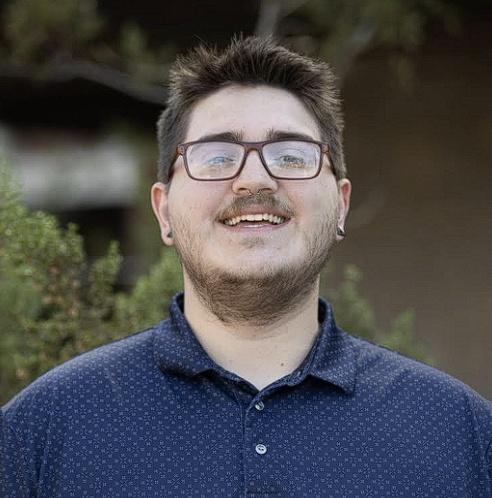
Bradley Frick | Graduate Student Representative
Bradley (Brad) Frick is a PhD student at the University of Arizona whose research focuses on bereavement from an interpersonal and family communication perspective. His work examines how individuals, couples, and families communicate about loss and how processes such as disclosure, social support, and continuing bonds shape grief experiences. Brad’s current research explores grief narratives constructed by surviving family members in the obituaries of their deceased loved ones.

C. Campbell Pendleton | 2026 Immediate Past Chair | Awards Committee Chair
Colleen (she/her/hers) is one of the co-founders of the National Communication Association’s Death & Dying Division and a member of the Board of Directors for Death Scholars, Inc. She is a scholar of Funeral Planning Communication, which explores how end-of-life decisions are discussed, negotiated, and implemented in the dynamic between funeral homes and the communities these institutions serve. She now works on the non-academic, industry side of communication and media, while producing collaborative research independently. She also enthusiastically encourages the next generation of scholars in end-of-life, death, and bereavement/grief in their research and community initiatives. As a human being outside of work, Colleen is a hiker, a dog rescuer, a gardener, a local bookshop haunt, and a life-lover living as absurdly as possible.
2026 ADVISORY BOARD
In addition to our dedicated Executive Board, we have an amazing group of very active volunteers that make up our Advisory Board. This is a unique element of our division wherein we engage additional members of our division to help distribute labor and to improve our efforts to diversify, increase equity, and include a greater number of voices at the table. These people work hard to organize programming, share resources, and revise division materials and policies. Many of these individuals have been with the division since its very inception.
Bryanna Hebenstreit | Social Media Manager at Death Scholars, Inc.
Laura Bruns
Mike Alvarez
Full Bio: https://www.mfalvarez.net/about
Lora Anderson
Jocelyn DeGroot Brown
Jessica Cherry
Jeannine Foster
Sara Kaufman
Linda Levitt
Kelsey Lunsford
Howard Rodriguez-Mori
Heather Smith
2026 NCA Death & Dying Division Initiatives
This year, the Executive Board of the Death & Dying Division hopes to build on its previous successes to host more programming and resources to benefit communication scholars of death, grief, and bereavement-related subjects. Here are a few of the ways this work will proceed in 2026.
Death Cafes
At this past NCA, the Death & Dying Division proudly sponsored and hosted two Death Cafes, bringing together scholars of death and the death-curious alike to meditate on our own mortality. This marks our third year hosting Death Cafes at NCA, and we hope to continue making space for intimate conversations about death moving forward.
Digital Workshops
Last year, several of our Advisory Board members led workshops on Zoom, talking about how to write a death/grief-focused dissertation, how to prepare a book manuscript for publication, and how to create a GIFTS (Great Ideas For Teaching Students) proposal to share death/grief-based communication pedagogy. We hope to offer more workshops this year for scholars of all interests and ability levels. If you–yes, you, reading this now–have an idea for a death/grief-based workshop that you think our general membership would benefit from, please reach out! You can find my contact information below.
Creative Networking Opportunities at NCA
We have routinely used our business meeting slot at NCA as a kind of meet-and-greet to connect scholars of death and grief and encourage participation with the division. We will continue to use our time at NCA as wisely as possible, as well as find new ways to network with each other and adjacent divisions, caucuses, and intellectual communities.
Division-Created Resources for Academics
Our longtime Andragogy and Pedagogy Chair, Mike Alvarez, curated an amazing archive of teaching resources for communication classrooms over his multi-year tenure in the position. Our founding Lead Archivist, Stephenson Whitestone-Brooks, put together an amazing archive of scholarship on death, grief, and other bereavement-related topics. You can find both archives here: https://www.deathscholars.org/resources
Our incoming Educational Archive Chair, Lindsay Gagnon, combines both of these roles and will continue to shape our archives and knowledge maintenance practices, seeking to aid scholars of death and grief in their endeavors to teach and study their research foci.
Here is to a year filled with conversation and community around all things death, dying, and grief-related.

Cheyenne Zaremba, 2026 Chair
University Email (direct communication): cez5128@psu.edu
General Email (all leadership): eoldeathscholars@gmail.com


Comments